 Lift’s Go
If you’re new to lifting, you don’t need a complicated split or a different workout every day. Three full-body sessions a week, built around a few big lifts, will take you a long way.
Here’s a simple plan you can start this week.
The schedule
Train three days a week with at least one rest day between sessions. For example, Monday, Wednesday and Friday. Alternate between Workout A and Workout B.
- Week 1: A, B, A
- Week 2: B, A, B
Workout A
- Squat: 3 sets of 6 to 10 reps
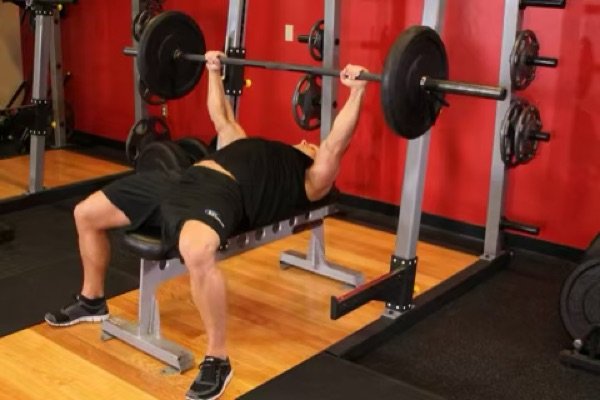
- Bench press: 3 sets of 6 to 10 reps
- Bent over barbell row: 3 sets of 8 to 12 reps
- Plank: 3 sets of 30 to 45 seconds
Workout B
- Deadlift: 2 sets of 5 to 8 reps
- Overhead press (dumbbell or barbell): 3 sets of 8 to 12 reps
- Pull-ups or lat pulldown: 3 sets of 6 to 12 reps
- Goblet squat or leg press: 2 sets of 10 to 15 reps
Rest about 2 to 3 minutes between sets of the big lifts, and 60 to 90 seconds on the rest.
How to choose your starting weights
Start lighter than you think. Pick a weight you can lift for the top of the rep range with good form and a couple of reps left in the tank. The first few weeks are for learning the movements. You’ll add weight quickly.
When to add weight
Use double progression. When you hit the top of the rep range on every set, add weight next time:
- Squat and deadlift: add 2.5 to 5 kg (5 to 10 lb).
- Bench, press and rows: add 1 to 2.5 kg (2.5 to 5 lb).
If you can’t hit the bottom of the range after a jump, drop back a little and build up again.
Warming up
Spend 5 minutes getting warm (a brisk walk, bike or rower), then do 2 or 3 lighter sets of your first lift before your working sets. For example, if your squat working weight is 60 kg: 20 kg for 10, 40 kg for 5, 50 kg for 3, then your work sets.
How long to run it
Run this plan for 8 to 12 weeks, or as long as you keep adding weight. When progress slows on most lifts, it’s time to move to a 4-day plan or a more advanced program.
Tips that make a big difference
- Log every set. You need last session’s numbers to know what to beat.
- Keep the exercises the same. Consistency is what lets you measure progress.
- Sleep 7 to 9 hours and eat enough protein.
- If something hurts (not just hard work, but pain), stop and swap the exercise.
Check with a doctor before starting a new program if you have an injury or health condition.
Track it with Lift’s Go
Lift’s Go shows what you lifted last time on every set and tells you when to add weight. It’s free on iPhone: https://apps.apple.com/us/app/weight-lifting-tracker-lift-go/id6835202886
Leave a Reply