Author: amg_admin

  • How to track your workouts (and why it makes you stronger)

    How to track your workouts (and why it makes you stronger)

    Most people who stop making progress in the gym have one thing in common: they don’t track their workouts. They show up, lift something that feels about right, and go home. Months later, the numbers haven’t moved.

    A workout log fixes that. Here’s what to track and how to use it.

    Why tracking works

    Getting stronger depends on progressive overload: doing a little more over time. You can’t do more than last time if you don’t know what last time was. A log turns “I think I did 60 kg” into a clear target to beat.

    It also helps you:

    • Spot stalls early, before you waste weeks.
    • See real progress on days when you don’t feel strong.
    • Notice patterns, like lifts that drop when you sleep badly.

    What to write down

    Keep it simple. For every exercise, log:

    • Exercise name, the same name every time.
    • Weight for each set.
    • Reps for each set.

    That’s the core. Optional extras that are worth it:

    • Body weight, once or twice a week.
    • Notes about form, pain or how a set felt.
    • Rest time, if you’re timing rests.

    What not to obsess over

    You don’t need to log every warm-up set, calories burned or your heart rate on a bench press. Focus on your working sets for the main lifts. More data isn’t better if you never look at it.

    How to use your log

    The magic happens before you lift, not after.

    • Before each exercise, look at what you did last time.
    • Set a target: one more rep, or a little more weight if you hit every rep last time.
    • After the session, check for new personal records.
    • Every few weeks, look at the chart for your main lifts. Is it going up?

    If a lift hasn’t moved in 3 or 4 weeks, change something: smaller weight jumps, a different rep range, or more recovery.

    Paper, spreadsheet or app?

    All three work if you use them. Paper is simple but hard to search. Spreadsheets are flexible but slow to update between sets. An app is the fastest in the gym and does the math for you: last session’s numbers, PRs and charts.

    Whatever you choose, the rule is the same: write it down every time, and try to beat it.

    Track it with Lift’s Go

    Lift’s Go shows what you lifted last time on every set and tells you when to add weight. It’s free on iPhone: https://apps.apple.com/us/app/weight-lifting-tracker-lift-go/id6835202886
  • A simple 3-day beginner strength plan

    A simple 3-day beginner strength plan

    If you’re new to lifting, you don’t need a complicated split or a different workout every day. Three full-body sessions a week, built around a few big lifts, will take you a long way.

    Here’s a simple plan you can start this week.

    The schedule

    Train three days a week with at least one rest day between sessions. For example, Monday, Wednesday and Friday. Alternate between Workout A and Workout B.

    • Week 1: A, B, A
    • Week 2: B, A, B

    Workout A

    • Squat: 3 sets of 6 to 10 reps
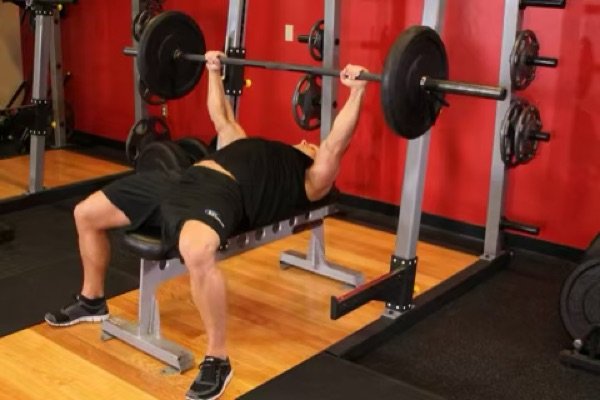
    • Bench press: 3 sets of 6 to 10 reps
    • Bent over barbell row: 3 sets of 8 to 12 reps
    • Plank: 3 sets of 30 to 45 seconds

    Workout B

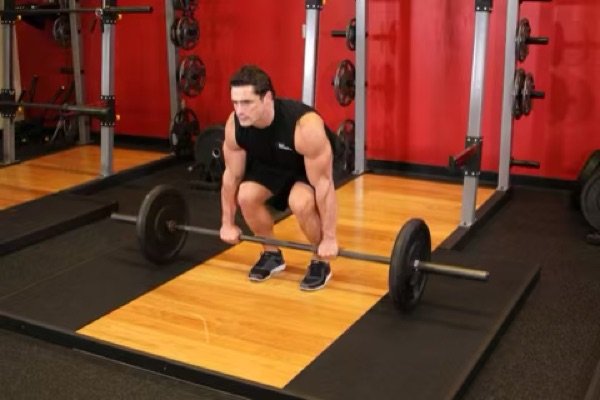
    • Deadlift: 2 sets of 5 to 8 reps
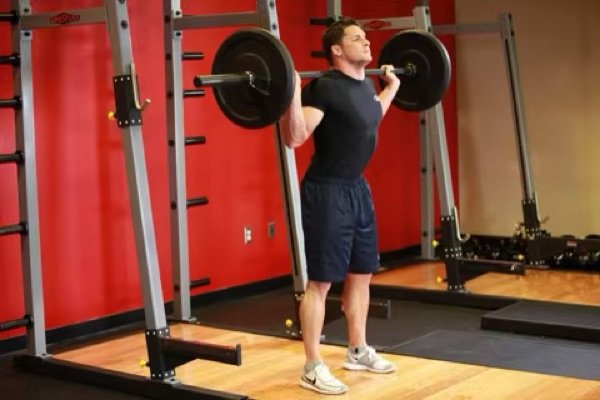
    • Overhead press (dumbbell or barbell): 3 sets of 8 to 12 reps
    • Pull-ups or lat pulldown: 3 sets of 6 to 12 reps
    • Goblet squat or leg press: 2 sets of 10 to 15 reps

    Rest about 2 to 3 minutes between sets of the big lifts, and 60 to 90 seconds on the rest.

    How to choose your starting weights

    Start lighter than you think. Pick a weight you can lift for the top of the rep range with good form and a couple of reps left in the tank. The first few weeks are for learning the movements. You’ll add weight quickly.

    When to add weight

    Use double progression. When you hit the top of the rep range on every set, add weight next time:

    • Squat and deadlift: add 2.5 to 5 kg (5 to 10 lb).
    • Bench, press and rows: add 1 to 2.5 kg (2.5 to 5 lb).

    If you can’t hit the bottom of the range after a jump, drop back a little and build up again.

    Warming up

    Spend 5 minutes getting warm (a brisk walk, bike or rower), then do 2 or 3 lighter sets of your first lift before your working sets. For example, if your squat working weight is 60 kg: 20 kg for 10, 40 kg for 5, 50 kg for 3, then your work sets.

    How long to run it

    Run this plan for 8 to 12 weeks, or as long as you keep adding weight. When progress slows on most lifts, it’s time to move to a 4-day plan or a more advanced program.

    Tips that make a big difference

    • Log every set. You need last session’s numbers to know what to beat.
    • Keep the exercises the same. Consistency is what lets you measure progress.
    • Sleep 7 to 9 hours and eat enough protein.
    • If something hurts (not just hard work, but pain), stop and swap the exercise.

    Check with a doctor before starting a new program if you have an injury or health condition.

    Track it with Lift’s Go

    Lift’s Go shows what you lifted last time on every set and tells you when to add weight. It’s free on iPhone: https://apps.apple.com/us/app/weight-lifting-tracker-lift-go/id6835202886

  • Progressive overload: how to add weight without stalling

    Progressive overload: how to add weight without stalling

    If you want to get stronger, you have to ask your body to do a little more over time. That’s progressive overload. It’s the one rule behind every strength program that works, from a beginner plan to a powerlifting peak.

    The hard part isn’t understanding it. It’s applying it week after week without guessing, stalling or getting hurt.

    What progressive overload means

    Your muscles adapt to the work you give them. Do the same weight for the same reps every week and, after a while, there’s no reason for them to adapt any further. Add a little more and they keep adapting.

    “More” can mean several things:

    • More weight on the bar
    • More reps with the same weight
    • More sets
    • Better form or a fuller range of motion with the same weight

    For most lifters, the first two are all you need.

    The simplest method: double progression

    Double progression is easy to follow and works for almost every exercise.

    • Pick a rep range, for example 8 to 12 reps.
    • Start with a weight you can lift for 8 good reps on every set.
    • Each session, try to add a rep or two.
    • When you hit 12 reps on every set, add weight and start again at 8.

    You always know what to do next: beat last time by a rep, or move up in weight.

    How much weight to add

    Small jumps go a long way. A good starting point:

    • Upper body lifts (bench press, overhead press, rows): add 1 to 2.5 kg (2.5 to 5 lb).
    • Lower body lifts (squat, deadlift, leg press): add 2.5 to 5 kg (5 to 10 lb).
    • Dumbbell and isolation lifts: add a rep first. Dumbbell jumps are big, so build reps before moving up.

    If you miss reps after a jump, that’s fine. Stay at the new weight until you hit every rep again.

    Why most people stall

    They don’t know what they did last time. If you can’t remember last week’s numbers, you can’t beat them. This is the number one reason people spin their wheels.

    They jump too fast. Adding 10 kg to the bench press because one set felt easy usually ends in missed reps and frustration.

    They change everything at once. New exercises, new rep ranges and new days every week make progress impossible to measure. Keep the core lifts the same for at least 6 to 8 weeks.

    They don’t recover. Sleep, food and rest days are part of the program. Overload only works if you recover from it.

    When progress slows down

    Beginners can often add weight every session. After a few months, that slows to every week, then every few weeks. That’s normal. When it happens:

    • Use smaller weight jumps.
    • Lean on adding reps before adding weight.
    • Take a lighter week (a deload) every 6 to 8 weeks if you feel beat up.

    The bottom line

    Write down every set, look at it before you lift, and try to beat it by a little. That’s it. Done consistently for a year, that simple habit beats almost any fancy program.

    Track it with Lift’s Go

    Lift’s Go shows what you lifted last time on every set and tells you when to add weight. It’s free on iPhone: https://apps.apple.com/us/app/weight-lifting-tracker-lift-go/id6835202886