 Lift’s Go
A good workout routine doesn’t need to be complicated. It needs to fit your schedule, train every muscle often enough, and give you a clear way to progress. Here’s how to build one in six steps.
Step 1: Decide how many days you can train
Be honest. A 3-day routine you actually follow beats a 6-day routine you skip. For most people:
- 2 to 3 days: full-body workouts
- 4 days: upper/lower split
- 5 to 6 days: push, pull, legs
Step 2: Pick your split
Your split decides which muscles you train on which day. Aim to hit each muscle about twice a week. Full-body and upper/lower splits do this naturally. Push, pull, legs does it if you run it twice a week. More on PPL: Push, pull, legs: a simple split, explained
Step 3: Choose your exercises
For each workout, pick:
- 1 to 2 big compound lifts (squat, deadlift, bench press, rows, overhead press)
- 2 to 3 accessory exercises for the muscles you want to bring up (curls, lateral raises, leg curls)
Choose exercises that fit your equipment and don’t hurt. Leave out lifts that bother an injury and pick an alternative for the same muscle.
Step 4: Set your sets and reps
A simple, reliable setup:
- Compound lifts: 3 sets of 5 to 10 reps
- Accessories: 2 to 3 sets of 10 to 15 reps
That adds up to roughly 10 to 20 hard sets per muscle per week for most people. More on volume: How many sets per muscle per week do you need?
Step 5: Plan how you’ll progress
A routine without progression is just exercise. Use double progression: work within a rep range, and when you hit the top of the range on every set, add weight.
Step 6: Track every set
Log your weight and reps every session. Before each set, check what you did last time and try to beat it by a rep or a little weight.
Sample 4-day workout routine (upper/lower)
Upper A
- Bench press: 3 × 6 to 8
- Barbell row: 3 × 8 to 10
- Overhead press: 2 × 8 to 10
- Pull-ups: 2 × max
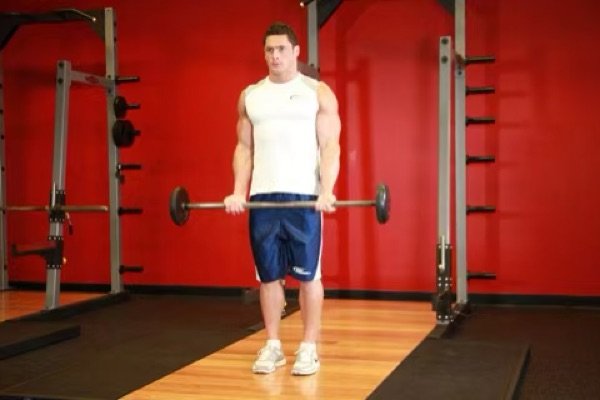
- Biceps curl: 2 × 10 to 12
Lower A
- Squat: 3 × 5 to 8
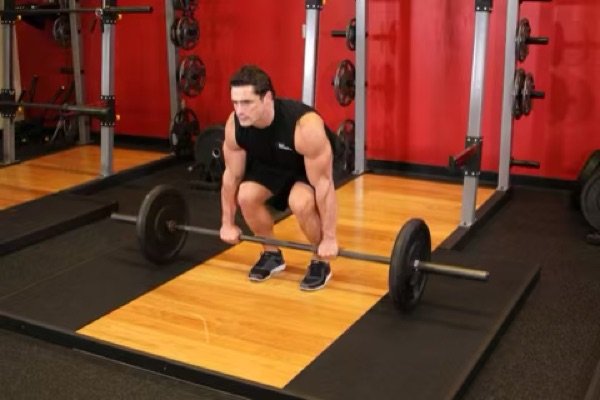
- Romanian deadlift: 3 × 8 to 10
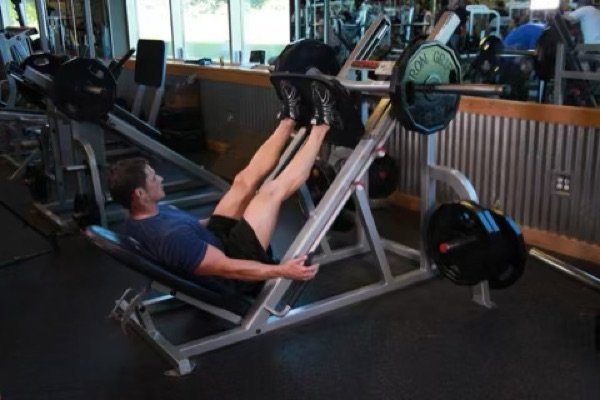
- Leg press: 2 × 10 to 12
- Calf raise: 3 × 12 to 15
Upper B and Lower B use variations: incline press, lat pulldown, deadlift, lunges.
How long to run it
Keep the same routine for 8 to 12 weeks and only change it when progress stalls for a few weeks in a row. Consistency is what makes a routine work.
Use a workout planner
If you’d rather not build it yourself, a workout planner can do the first draft. In Lift’s Go, you answer 4 questions about your goal, experience, days and gear and get a weekly plan, or build your own routines from 870+ exercises.
Track it with Lift’s Go
Lift’s Go is a free weightlifting tracker for iPhone. It shows what you lifted last time on every set and tells you when to add weight: https://apps.apple.com/us/app/weight-lifting-tracker-lift-go/id6835202886